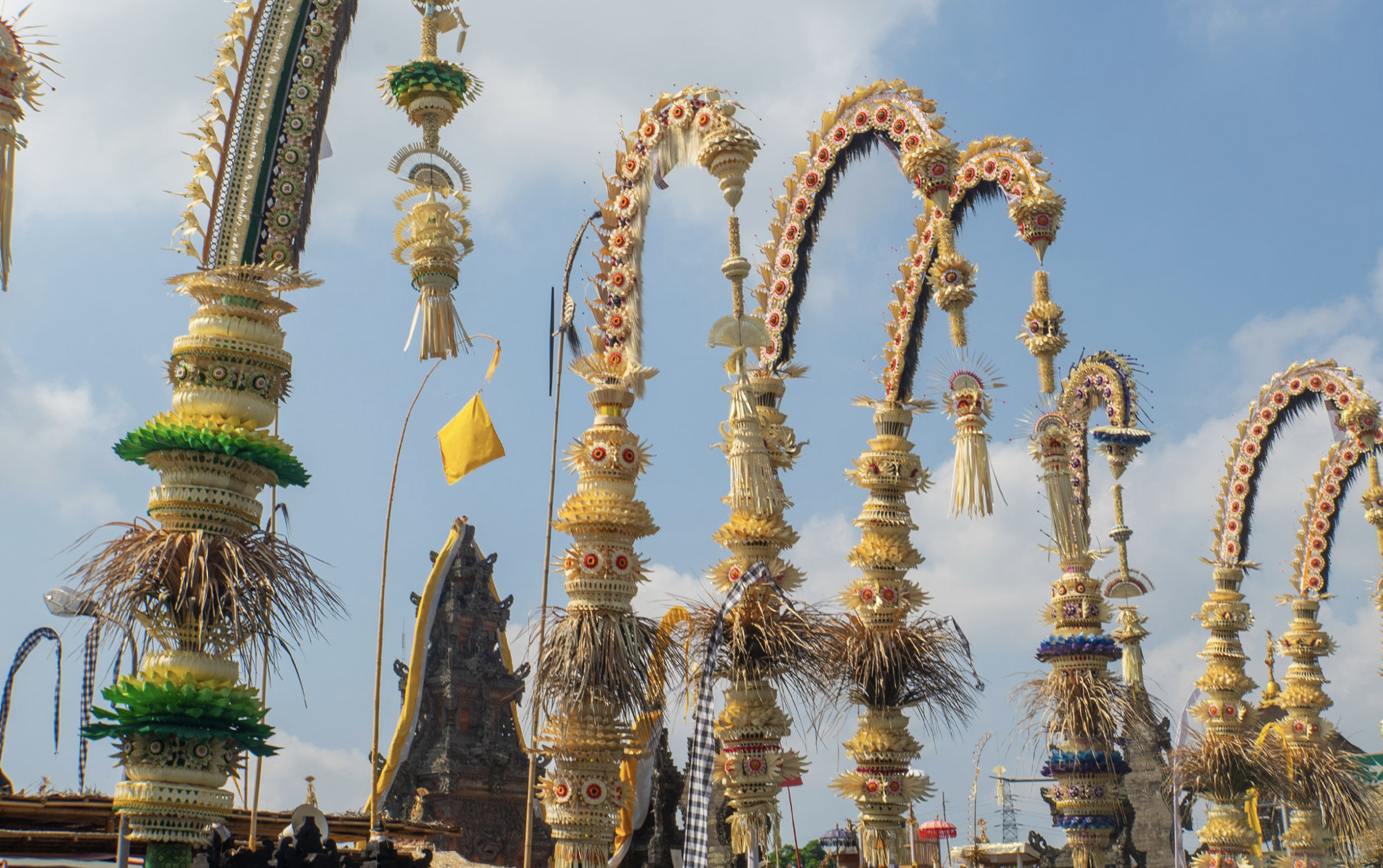
Galungan in Bali is more than a festive moment—it is a profound expression of spirituality, balance, and cultural identity. For visitors, it may first appear as a visual spectacle: tall bamboo poles arching gracefully along village roads, offerings laid with care, and families dressed in ceremonial attire. But beneath this beauty lies a deeply rooted philosophy that speaks to the essence of Balinese Hindu life.
Observed every 210 days according to the Balinese Pawukon calendar, Galungan marks the victory of dharma (good) over adharma (evil). It is a time when ancestral spirits are believed to return to earth, welcomed through rituals, offerings, and communal devotion. To understand Galungan is to glimpse the rhythm of Bali itself—where the sacred and the everyday are inseparable.
The Meaning and Context of Galungan
At its core, Galungan is a spiritual milestone. It commemorates the triumph of righteousness and reminds individuals of their responsibility to maintain harmony within themselves and the world around them.
In Balinese Hindu belief, life is a continuous balancing act between opposing forces. Galungan serves as a moment of reflection: have we upheld truth, compassion, and integrity? Or have we allowed imbalance to take root?
The celebration begins several days before the main day, with rituals such as Penyekeban, Penyajahan, and Penampahan. These preparatory days are not merely logistical—they represent stages of inner readiness. By the time Galungan arrives, both the home and the spirit are prepared to receive ancestral blessings.
Core Traditions and Ritual Practices
Penjor: Symbols of Gratitude
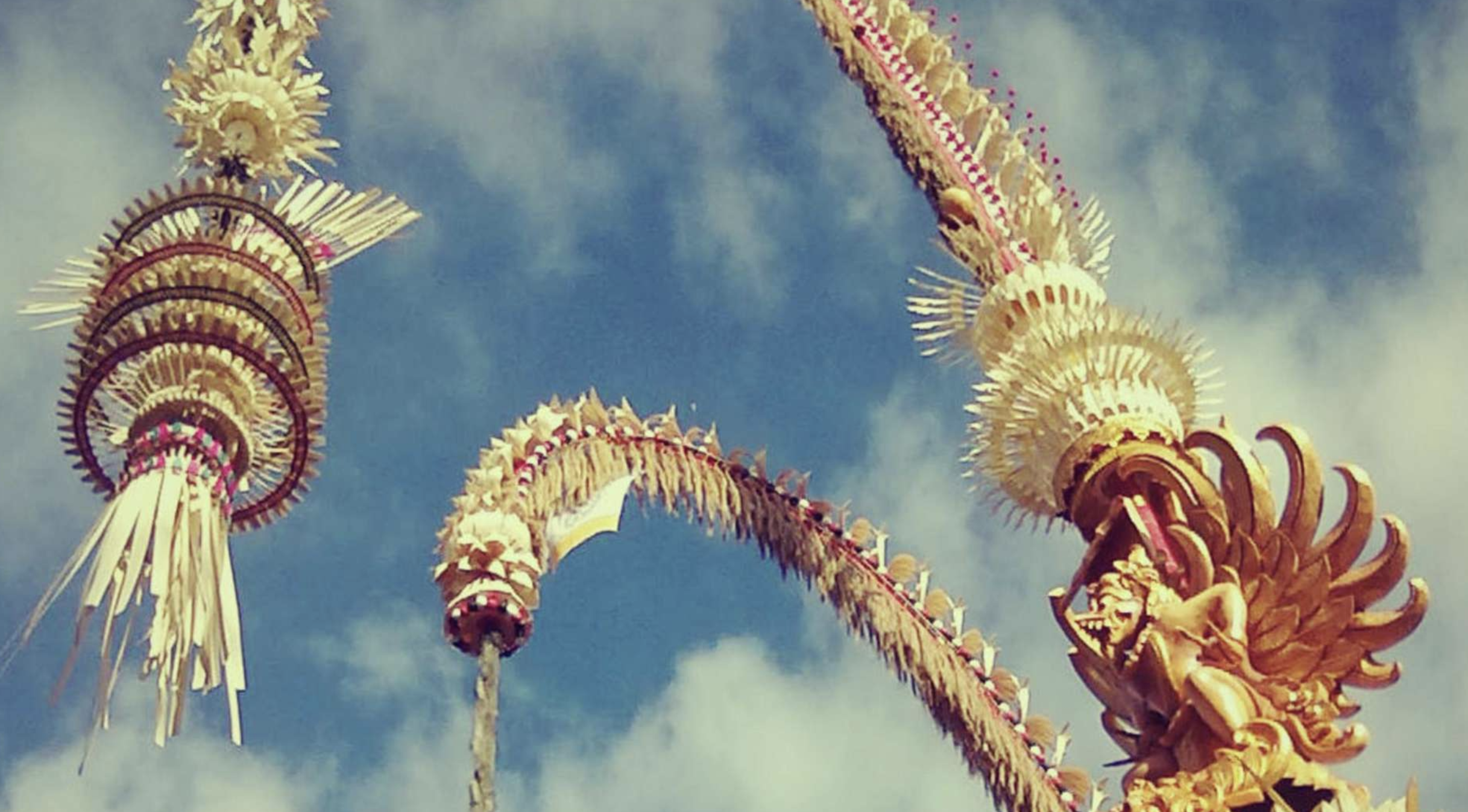
One of the most recognizable elements of Galungan is the penjor—a tall, curved bamboo pole decorated with coconut leaves, fruits, rice, and symbolic ornaments.

Each penjor stands in front of a family compound, representing Mount Agung, the sacred axis of the island. It is both an offering and a statement of gratitude for prosperity. Walking through villages during Galungan, one can feel a quiet reverence in the repetition of these structures—each unique, yet part of a collective expression.
Offerings and Temple Visits
Offerings, known as banten, are central to Galungan. Carefully arranged with flowers, food, and incense, they are placed in temples, shrines, and household altars.
Families visit temples dressed in traditional attire, bringing offerings and prayers. These visits are not rushed; they unfold slowly, allowing space for reflection and connection.
Ancestral Presence
A key belief during Galungan is that ancestral spirits descend to visit their families. Homes are cleansed, decorated, and filled with offerings to welcome them. This connection between the living and the spiritual realm reinforces the continuity of life across generations.
A Practical Guide to Experiencing Galungan
For travelers, witnessing Galungan can be one of the most meaningful cultural experiences in Bali. However, understanding how to engage respectfully is essential.
What to Expect
- Streets adorned with penjors in villages like Ubud
- Increased temple activity across the island
- Families gathering for prayers and meals
- A quieter, more reflective atmosphere compared to typical tourist days
How to Participate Respectfully
- Dress modestly if visiting temples (sarong and sash are required)
- Observe ceremonies without interrupting or photographing intrusively
- Follow local guidance if invited into a ritual space
Timing Your Visit
Galungan occurs every 210 days, followed by Kuningan, which marks the end of the celebration ten days later. Planning your visit around these dates allows you to experience both the beginning and conclusion of this sacred period.
The Local Perspective: Life During Galungan
For Balinese families, Galungan is both sacred and personal. Preparations often begin days in advance, involving cooking, crafting offerings, and cleaning the home.

Children learn traditions by observing and participating, while elders guide the process with quiet authority. There is a sense of continuity—each Galungan connects past, present, and future.
In rural areas, the celebration feels especially intimate. The absence of crowds allows the rituals to unfold naturally, revealing the depth of community life. Even in busier areas, however, the spirit of Galungan remains intact, carried through shared intention.
Coffee, Ritual, and Moments of Stillness
During Galungan, daily rhythms shift. There is more time spent at home, in temples, and in quiet reflection. It is in these pauses that small rituals—like sharing coffee—take on deeper meaning.
In Bali, coffee is not only a beverage but a moment of grounding. Whether enjoyed after temple visits or during preparation breaks, it becomes part of the day’s flow.
At places like Gangga Coffee, this connection is gently preserved. Rather than interrupting the cultural rhythm, it offers a space to sit, observe, and absorb. The experience of coffee here aligns with the spirit of Galungan: unhurried, attentive, and rooted in presence.
Soft Encounters with Tradition at Gangga Coffee
For those exploring Bali during Galungan, moments of rest become just as meaningful as moments of ceremony. After witnessing temple rituals or walking beneath rows of penjors, there is a natural desire to pause.
Gangga Coffee provides such a space—not as an escape from culture, but as a continuation of it. The environment reflects the same values found in Galungan: balance, respect, and mindfulness.
Here, coffee becomes a medium for reflection. It allows visitors to process what they have seen and felt, turning observation into understanding.
Embracing the Essence of Galungan
Galungan in Bali is not simply an event to witness—it is a philosophy to feel. It reminds us that life is shaped by the choices we make between harmony and imbalance, presence and distraction.
As you move through Bali during this sacred time, consider allowing space for quiet observation. Walk slowly, notice the details, and let the atmosphere guide you.
And when you feel the need to pause, you may find yourself drawn to a place like Gangga Coffee—where the rhythm of the island continues in a quieter form. There, with a cup in hand, the meaning of Galungan may settle more deeply.
If your journey brings you to Bali during this time, you are gently invited to experience that stillness for yourself at Gangga Coffee, where reflection and culture meet without urgency.