Festivals in Bali are not confined to specific seasons or major public holidays. They exist as a continuous thread woven into daily life, shaping how time is understood, how communities interact, and how spirituality is practiced. For many visitors, the first encounter with a Balinese ceremony happens unexpectedly—perhaps a quiet road suddenly filled with a procession, or a temple adorned with intricate offerings and music.
Yet these moments are not exceptions. They are the norm.
To understand festivals in Bali is to move beyond the idea of “events” and toward something more fluid: a living system of rituals that reflects a deep philosophical worldview. These ceremonies are not staged for observation. They are acts of devotion, continuity, and balance.
This article offers a deeper journey into that world—one that goes beyond surface descriptions and invites you to understand the rhythms, meanings, and lived experiences behind Bali’s ceremonial life.
The Cultural Context Behind Festivals in Bali
A Different Relationship With Time
In many parts of the world, time is linear—moving forward in a predictable sequence. In Bali, time is cyclical.
This cyclical understanding is expressed through two primary calendar systems: the Pawukon calendar (210 days) and the Saka lunar calendar. Each governs different aspects of religious and social life, resulting in a rich layering of ceremonies that repeat, overlap, and evolve.
Rather than asking “when is the next festival,” a more meaningful question might be: “what is happening now?”
Because in Bali, something is always happening.
Ritual as a Form of Balance
At the core of Balinese philosophy lies Tri Hita Karana—the principle of harmony between three elements:
- Humans and the Divine
- Humans and nature
- Humans and each other
Festivals in Bali are not celebrations in the conventional sense. They are acts of maintaining this balance.
Offerings are made not only to honor the gods but also to acknowledge unseen forces. Rituals are performed not only for blessings but to prevent imbalance. Even the smallest daily offering, placed carefully on the ground or at a shrine, contributes to this ongoing equilibrium.
In this sense, every festival—large or small—is part of a continuous effort to sustain harmony in a world that is always in motion.
Community as the Foundation
Balinese ceremonies are deeply communal. Preparation for festivals often involves entire villages working together—creating offerings, organizing processions, preparing food, and coordinating temple activities.
This shared responsibility reinforces social bonds. Participation is not optional; it is part of belonging.
For visitors, this communal aspect is often one of the most striking elements. Festivals are not performed by specialists for an audience. They are lived by everyone.
Major Festivals in Bali and Their Deeper Meaning
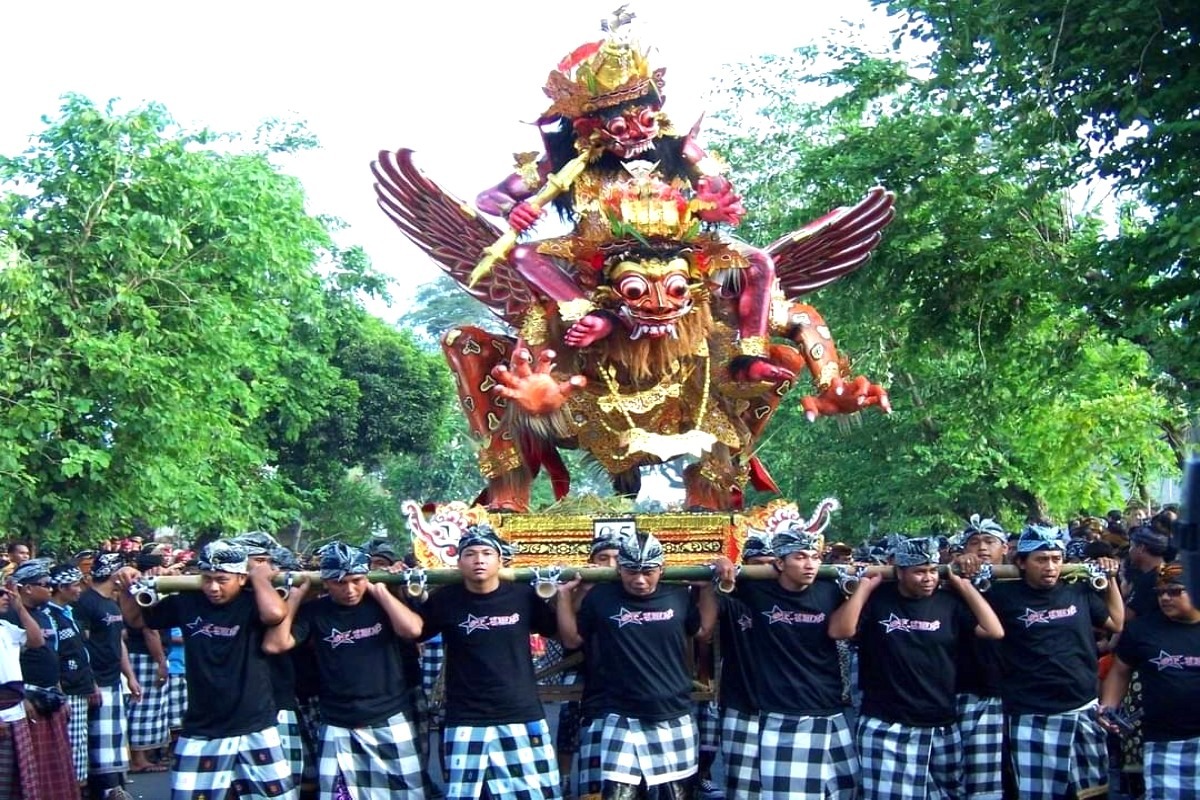
Nyepi – Silence as Renewal
Nyepi, the Balinese Day of Silence, stands apart not only among festivals in Bali but among global celebrations.
The day begins not with quiet, but with intensity. On the eve of Nyepi, known as Ngerupuk, villages come alive with the creation and parade of ogoh-ogoh—large, often grotesque effigies representing negative forces and chaotic energies.
These figures are carried through the streets in vibrant processions, accompanied by music, fire, and movement. It is a deliberate expression of noise and disorder.
And then, everything stops.
For 24 hours, Bali enters complete silence. No travel, no work, no lights, no entertainment. Even the airport closes.
Nyepi is a day of introspection, guided by four principles:
- No fire or light
- No work
- No travel
- No entertainment
For locals, this is a time to reflect on the past year and reset spiritually. For visitors, it is often an unexpected but profound experience—a rare opportunity to encounter stillness on an island known for its energy.
Galungan and Kuningan – The Return of Ancestors
Galungan is one of the most important festivals in Bali, marking the victory of dharma (good) over adharma (evil).
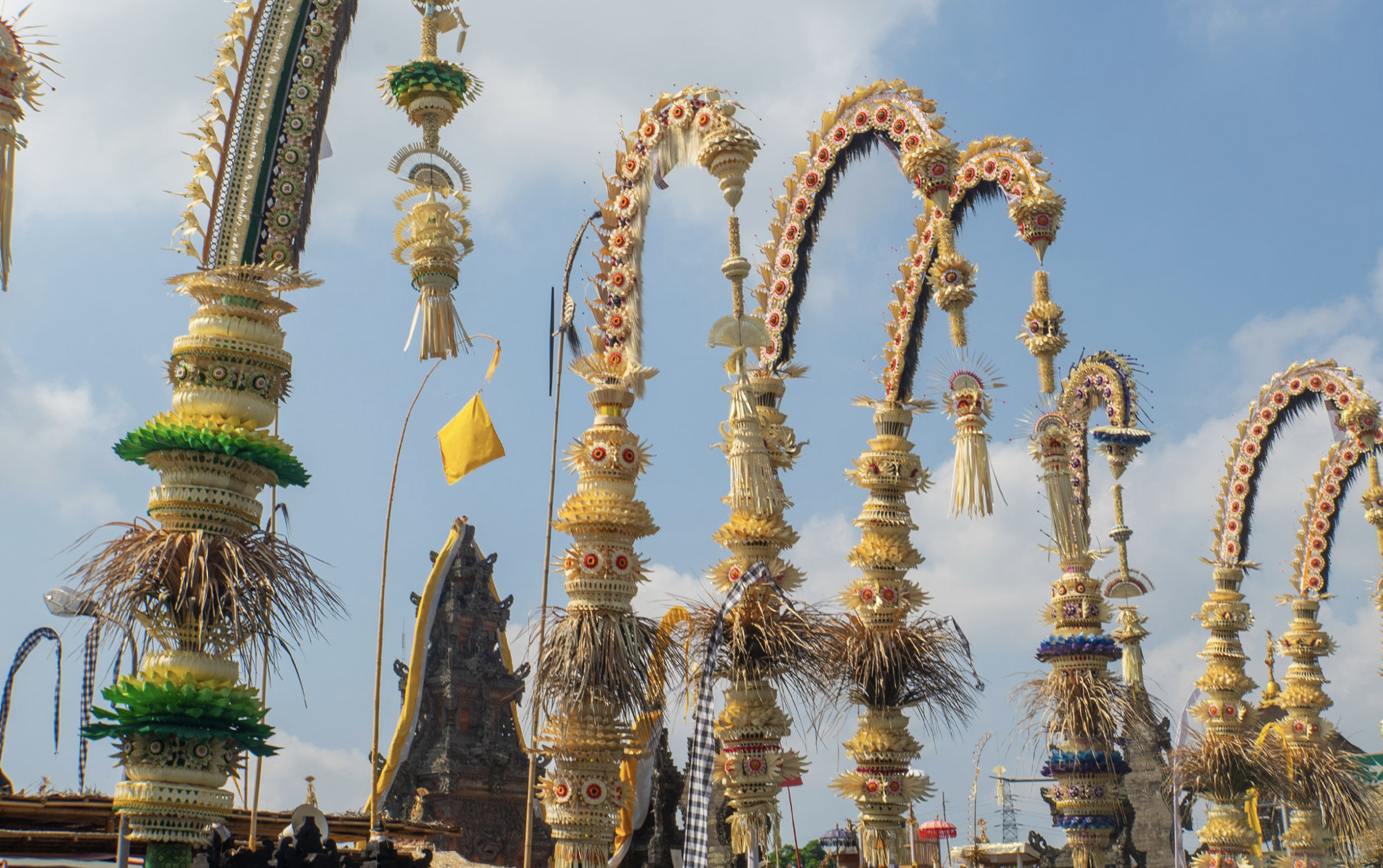
During this period, ancestral spirits are believed to return to visit their families. Homes and temples are decorated with offerings, and tall bamboo poles known as penjor line the streets.
Each penjor is carefully crafted, adorned with coconut leaves, fruits, and symbolic elements. They curve gracefully over the road, creating a visual landscape that feels both festive and sacred.
Galungan is a time of connection—not only with the divine but with lineage and memory.
Ten days later, Kuningan marks the departure of the ancestors. The mood shifts from celebration to reflection, as families express gratitude and prepare for the spirits’ return to their realm.
Saraswati – Knowledge as Sacred
Saraswati Day honors the goddess of knowledge, learning, and the arts.
Unlike other festivals that involve large public gatherings, Saraswati is quieter and more introspective. Books, manuscripts, and sacred texts are placed on altars and blessed.
Interestingly, reading is avoided on this day. Instead, knowledge is respected as something to be honored, not consumed.
The following day, Banyu Pinaruh, is dedicated to purification. Many people visit the sea or water temples, symbolizing the cleansing of the mind and spirit.
Pagerwesi – Strengthening the Inner Self
Pagerwesi, meaning “iron fence,” is a day focused on spiritual protection.
While it may not be as visually striking as other festivals, its significance lies in its inward focus. It is a time to strengthen one’s inner defenses against negative influences.
Ceremonies are often held at family temples, emphasizing personal reflection and resilience.
Odalan – Temple Anniversaries as Living Traditions
Every temple in Bali celebrates its anniversary every 210 days, based on the Pawukon calendar. These ceremonies, known as odalan, vary in scale but are deeply rooted in local identity.
An odalan is not a single-day event. It often spans several days, involving:
- Offerings prepared in intricate detail
- Traditional dances performed as sacred acts
- Gamelan music filling the temple grounds
Unlike major festivals, odalan ceremonies feel intimate. They are tied to specific places and communities, offering visitors a glimpse into the local rhythm of life.
The Layers of Ritual: Beyond What Is Seen
Offerings as a Language
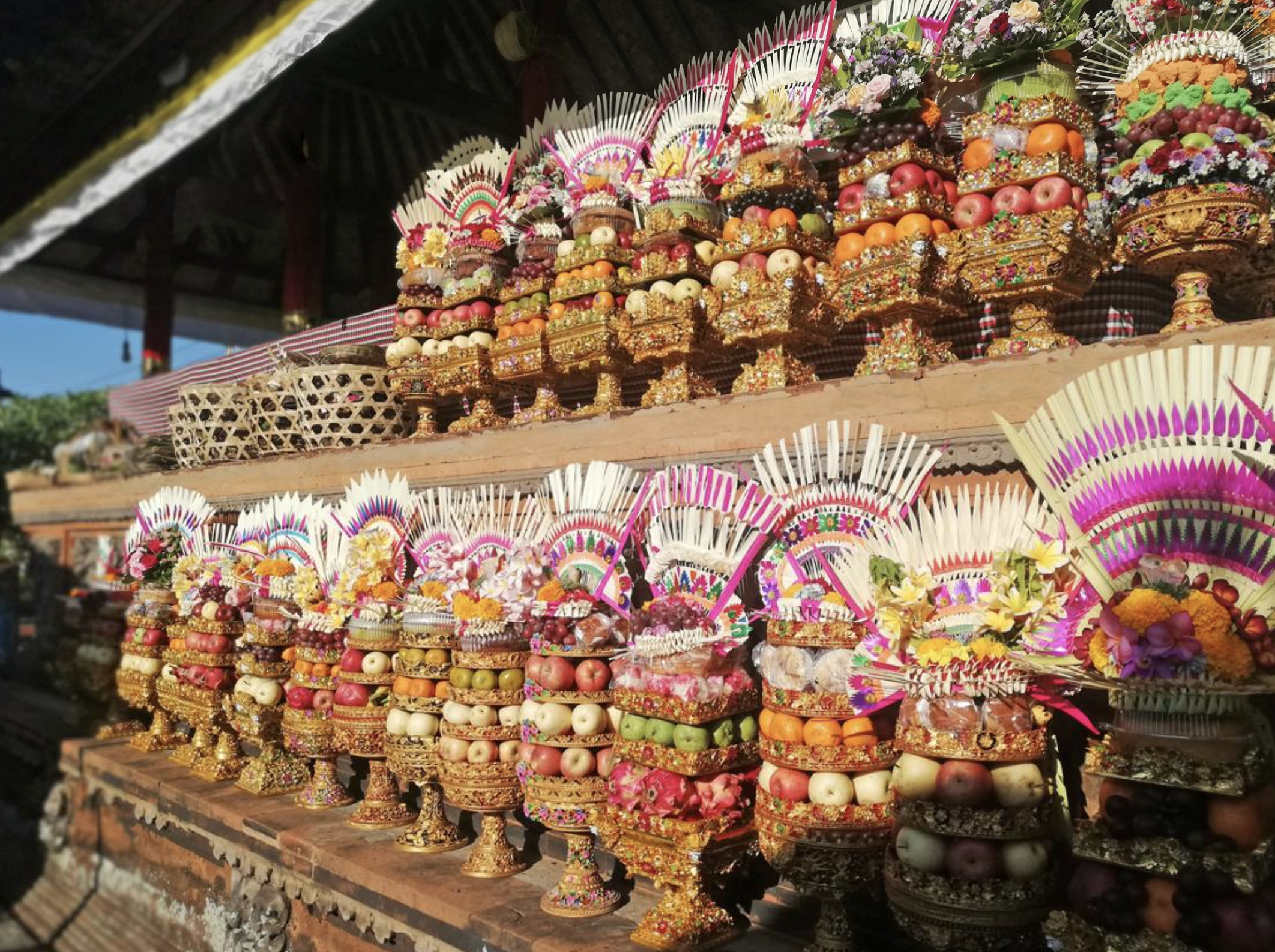
One of the most visible aspects of festivals in Bali is the presence of offerings, known as canang sari.
These small, carefully arranged baskets contain flowers, food, and symbolic items. They are placed daily in homes, temples, and public spaces.
During festivals, offerings become more elaborate—sometimes towering structures that require hours or days to create.
Each element carries meaning:
- Flowers represent different deities
- Food symbolizes gratitude
- Incense connects the offering to the spiritual realm
Offerings are not decorative. They are a form of communication.
Music and Dance as Devotion
In Bali, dance and music are not separate from spirituality. They are integral to it.
During festivals, traditional dances are performed not for entertainment but as offerings to the gods. Each movement, costume, and rhythm is imbued with meaning.
Gamelan music, with its layered and cyclical patterns, creates an atmosphere that feels both structured and fluid—mirroring the broader philosophy of Balinese life.
Sacred Spaces and Their Energy
Temples in Bali are not static monuments. They are active spaces, continuously used and renewed through ceremonies.
During festivals, these spaces transform. Decorations, offerings, and activities create a dynamic environment where the sacred becomes visible.
For visitors, entering a temple during a ceremony can feel overwhelming at first. But with patience and respect, it becomes an opportunity to witness something deeply authentic.
A Practical Guide to Experiencing Festivals in Bali
How to Approach With Respect
Experiencing festivals in Bali requires awareness and sensitivity.
Key considerations include:
- Wearing appropriate attire (sarong and sash)
- Observing without interrupting rituals
- Avoiding stepping on or disturbing offerings
Respect is not about strict rules, but about presence—being attentive to the environment and those around you.
Letting Go of Control
Because festival dates shift and ceremonies are often localized, it is difficult to plan precisely around them.
Instead of trying to control the experience, allow space for spontaneity. Some of the most meaningful encounters happen unexpectedly.
Staying in culturally rich areas such as Ubud increases the likelihood of encountering ceremonies in a natural way.
The Value of Quiet Observation
Not every experience needs to be documented or shared.
Sometimes, the most meaningful way to engage with festivals in Bali is simply to observe—to sit quietly, watch, and absorb.
In doing so, you begin to notice details that might otherwise be missed: the rhythm of movement, the expressions of participants, the subtle shifts in atmosphere.
A Local Perspective: Living With Ceremony
For Balinese people, festivals are not separate from daily life. They are part of it.
Preparation for ceremonies begins early. Families gather to create offerings, often working together for hours. These moments are as important as the ceremonies themselves.
Children learn through participation—by helping, observing, and gradually understanding the meanings behind each action.
This continuity ensures that traditions are not preserved as history, but lived in the present.
The Rhythm Between Ceremony and Stillness
What makes festivals in Bali particularly unique is not only their frequency, but the rhythm they create.
There are moments of intensity—processions, music, gatherings—and moments of stillness—reflection, prayer, silence.
This balance is what gives Balinese culture its depth. It is not always outwardly expressive, nor always inwardly quiet. It moves between the two.
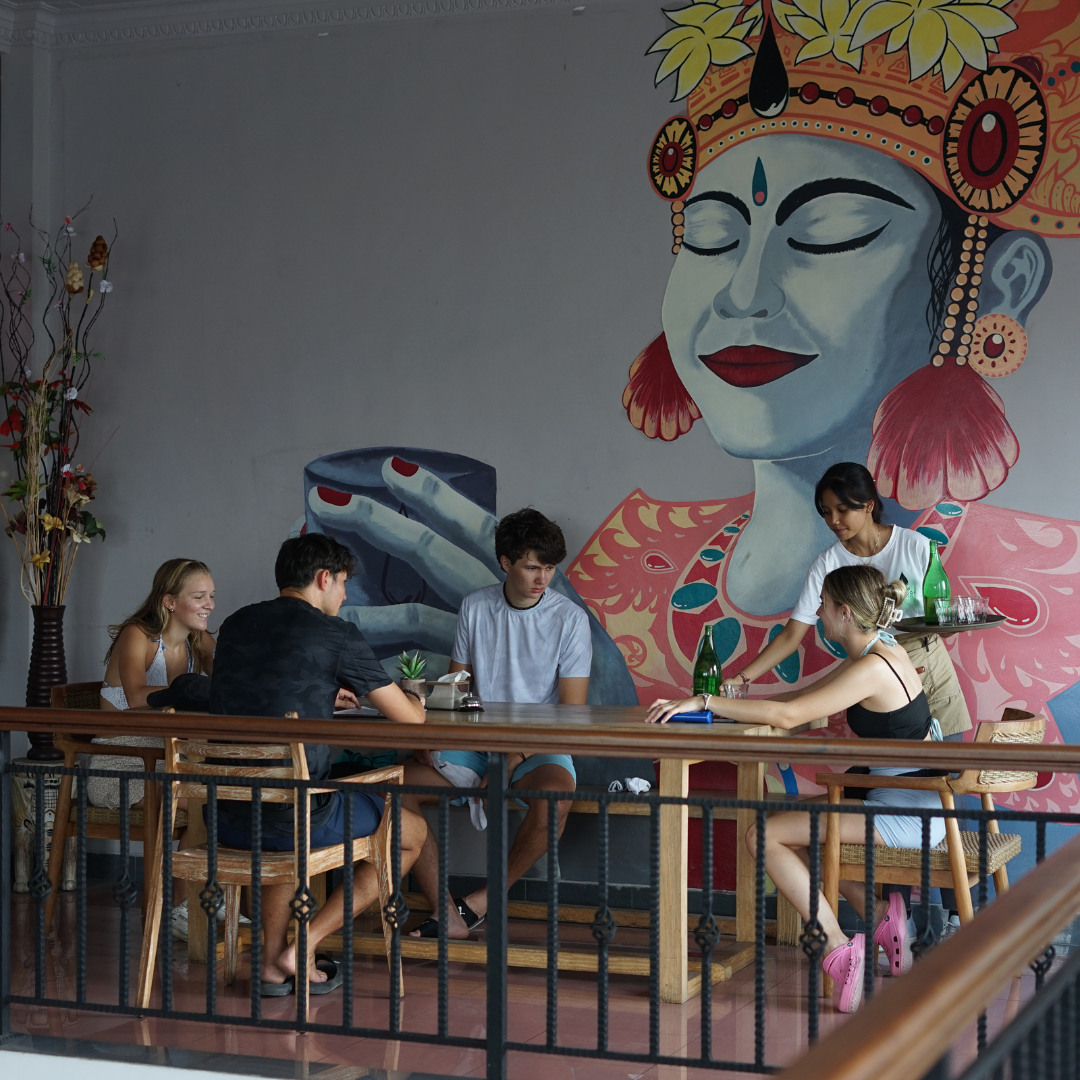
Coffee, Pause, and Cultural Reflection
Amid the richness of ceremonies, there are also moments of pause.
After witnessing a festival, there is often a need to sit, to reflect, to process what has been experienced. These moments are not separate from the cultural journey—they are part of it.
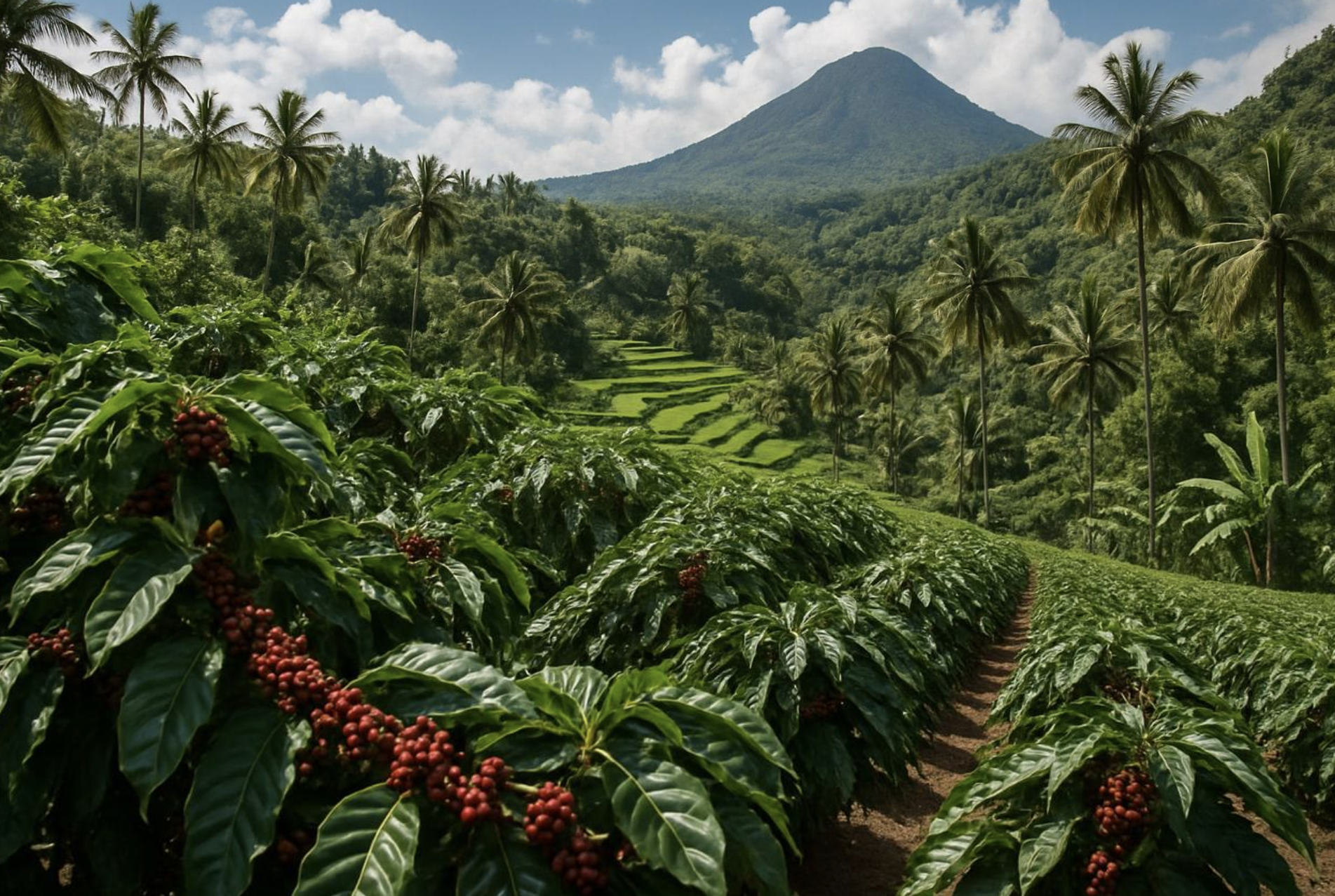
Coffee, in this context, becomes more than a beverage. It becomes a space for reflection.
In places like Ubud, where cultural life continues to unfold daily, these pauses allow visitors to connect more deeply with what they have seen.
A Moment to Reflect
Festivals in Bali are not designed to impress. They are designed to sustain—a way of maintaining balance, honoring tradition, and connecting with something beyond the visible.
To experience them fully is not to attend as a spectator, but to observe with openness and humility.
And in between these encounters—between ceremony and quiet—you may find yourself seeking a place to sit, to reflect, and to let the experience settle.
If your journey brings you through Ubud, you might find that space at Gangga Coffeefestivals in Bali, Bali culture, Balinese ceremonies, Bali traditions, Bali spiritual life, Nyepi Bali, Galungan and Kuningan, Saraswati day Bali, Balinese Hinduism, Bali temple ceremony, odalan Bali, Bali cultural calendar, what festivals are in Bali, Bali religious festivals guide, Balinese rituals explained, when to see festivals in Bali, traditional events in Bali, Bali ceremony experience, things to do in Bali, cultural experiences Bali, Ubud culture guide, Bali travel guide, authentic Bali experience, coffee culture Bali, slow travel Bali, mindful travel Bali, Ubud lifestyle, Gangga Coffee
. Not as a destination, but as part of the rhythm—a place where the pace softens, and where each cup offers a moment to pause.
You can explore it here:
https://ganggacoffee.com/locations