In Bali, certain symbols speak quietly yet profoundly. Among them, the penjor stands as one of the most recognizable and meaningful. During Galungan, these tall, curved bamboo poles line the streets, swaying gently above daily life. For many visitors, they are beautiful decorations. But to understand the penjor Bali meaning is to uncover a deeper story—one of gratitude, spirituality, and harmony.
Far from being ornamental, each penjor represents an offering, a reminder, and a reflection of the Balinese worldview. It is both deeply personal and collectively shared, connecting households, communities, and spiritual beliefs into a single visual expression.
Understanding Penjor in the Context of Galungan
The penjor is inseparable from Galungan, one of Bali’s most important religious celebrations. Installed a day before the main event, it signals that the island is entering a sacred period.
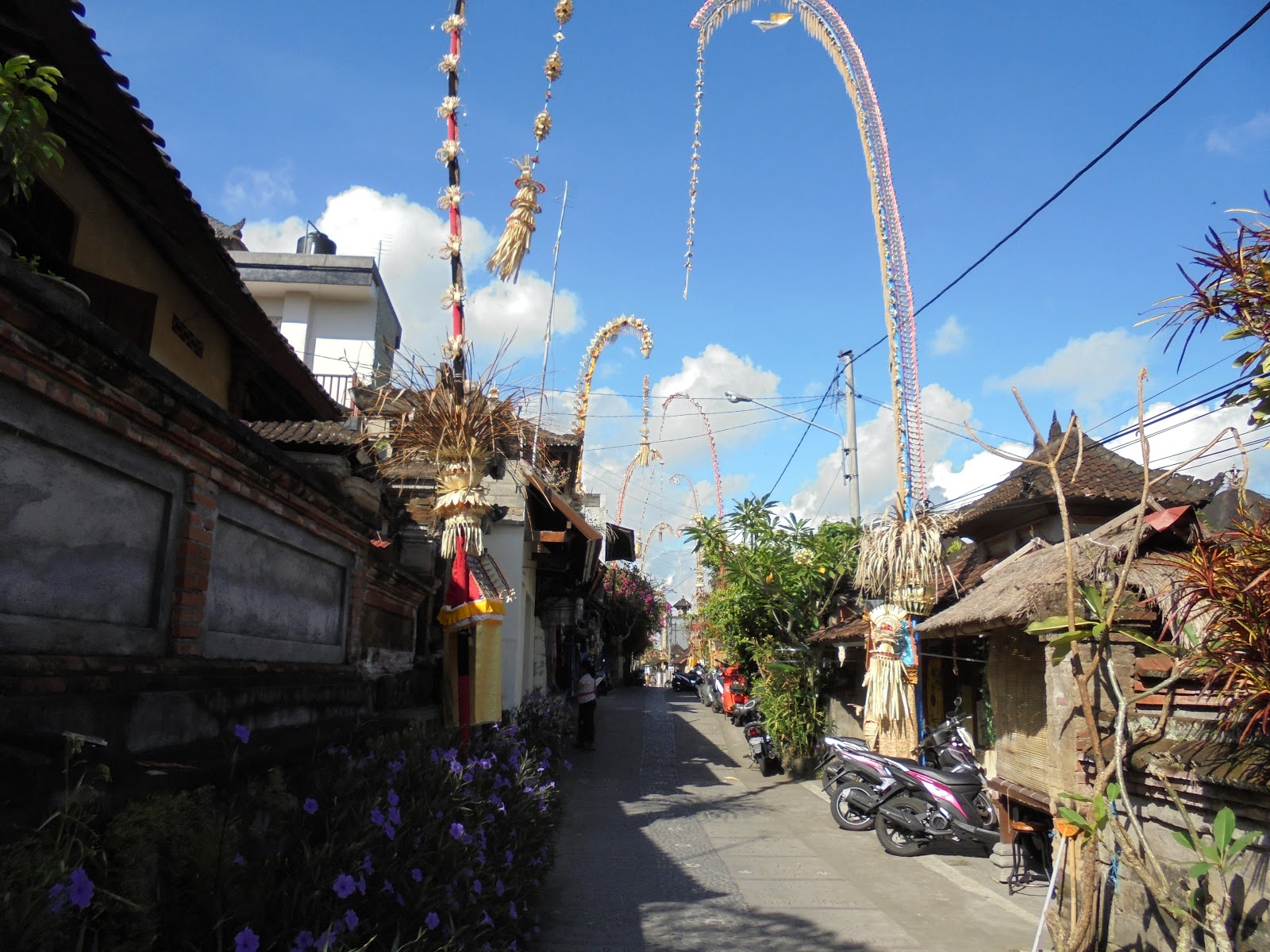
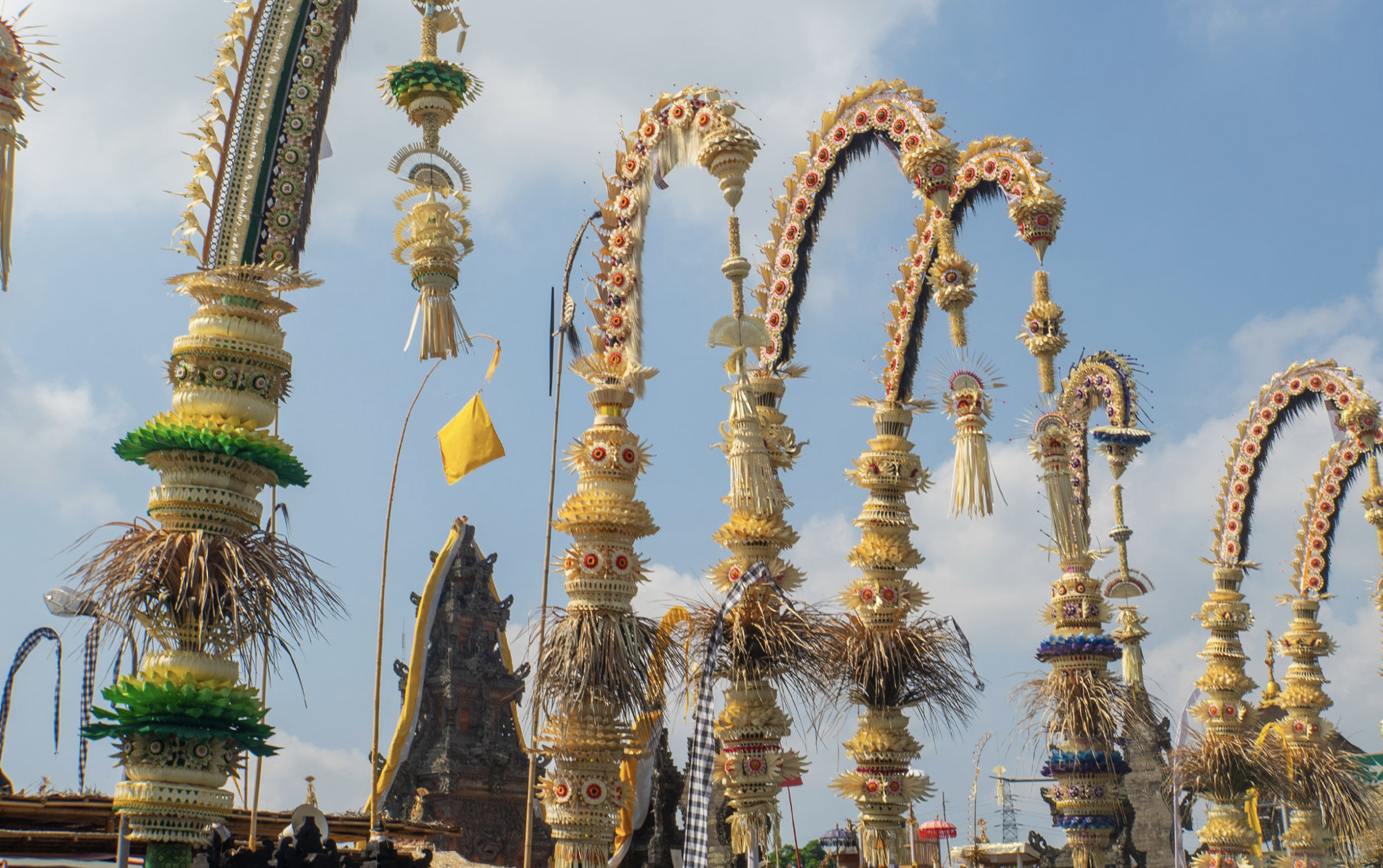
Each household places a penjor in front of their home, creating rows of gracefully arching bamboo poles along roads and pathways. The visual impact is striking, but its meaning is even more significant.
Penjor serves as a form of offering to the divine. It expresses gratitude for prosperity, especially in agriculture, acknowledging the blessings that sustain life. At the same time, it marks the presence of Galungan—announcing that spiritual balance is being restored.
The Symbolism Behind Every Element of Penjor
At first glance, a penjor may appear as a simple decorated bamboo pole. In reality, every component carries symbolic meaning rooted in Balinese Hindu philosophy.
The Bamboo Pole: Mount Agung and the Cosmos
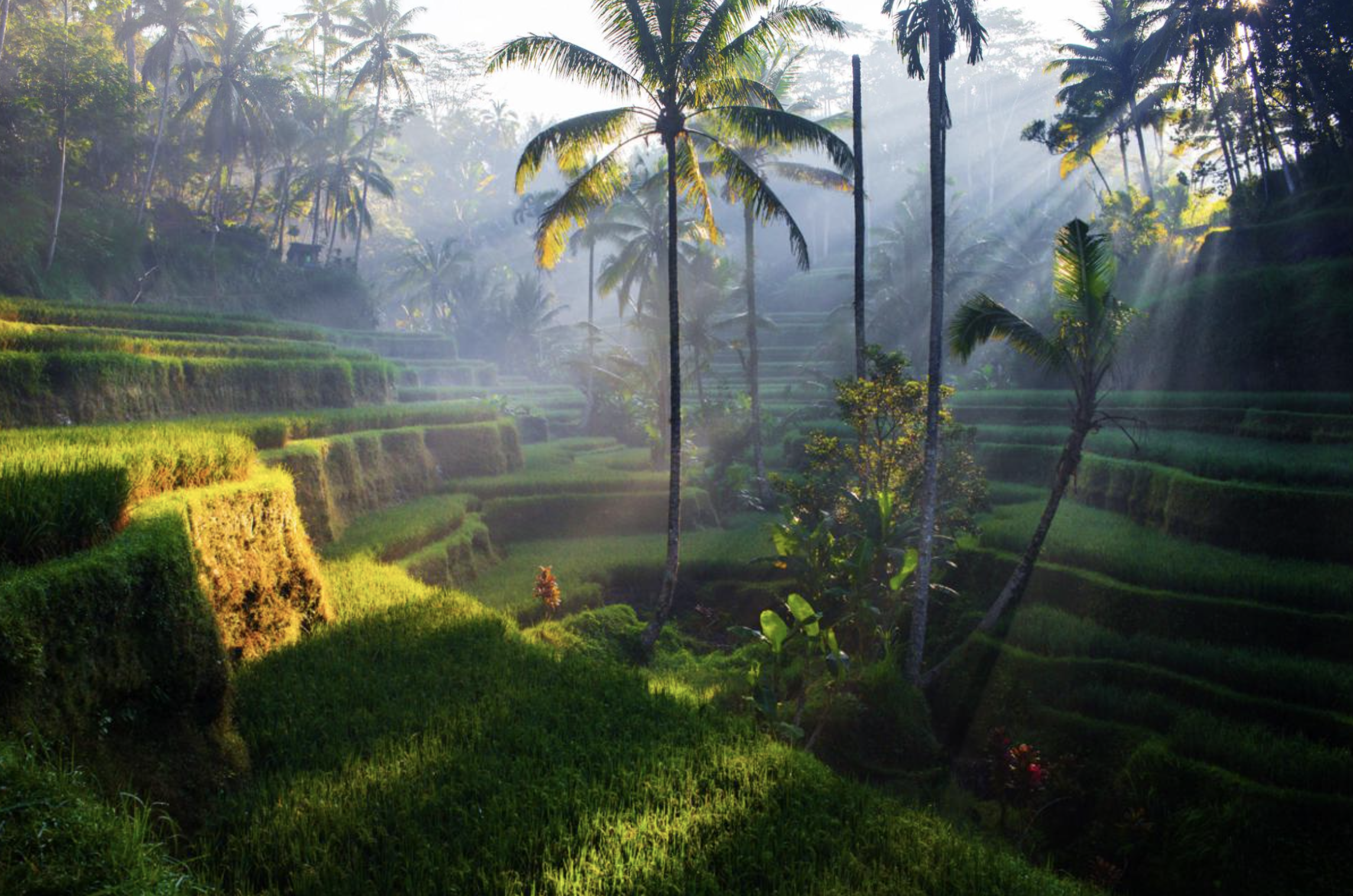
The tall, curved bamboo represents Mount Agung, the most sacred mountain in Bali. In spiritual terms, Mount Agung is seen as the axis of the universe—the place where the divine resides.
The upward curve of the penjor reflects this connection between earth and heaven. It is a reminder that human life exists within a larger cosmic order.
The Decorations: Prosperity and Gratitude
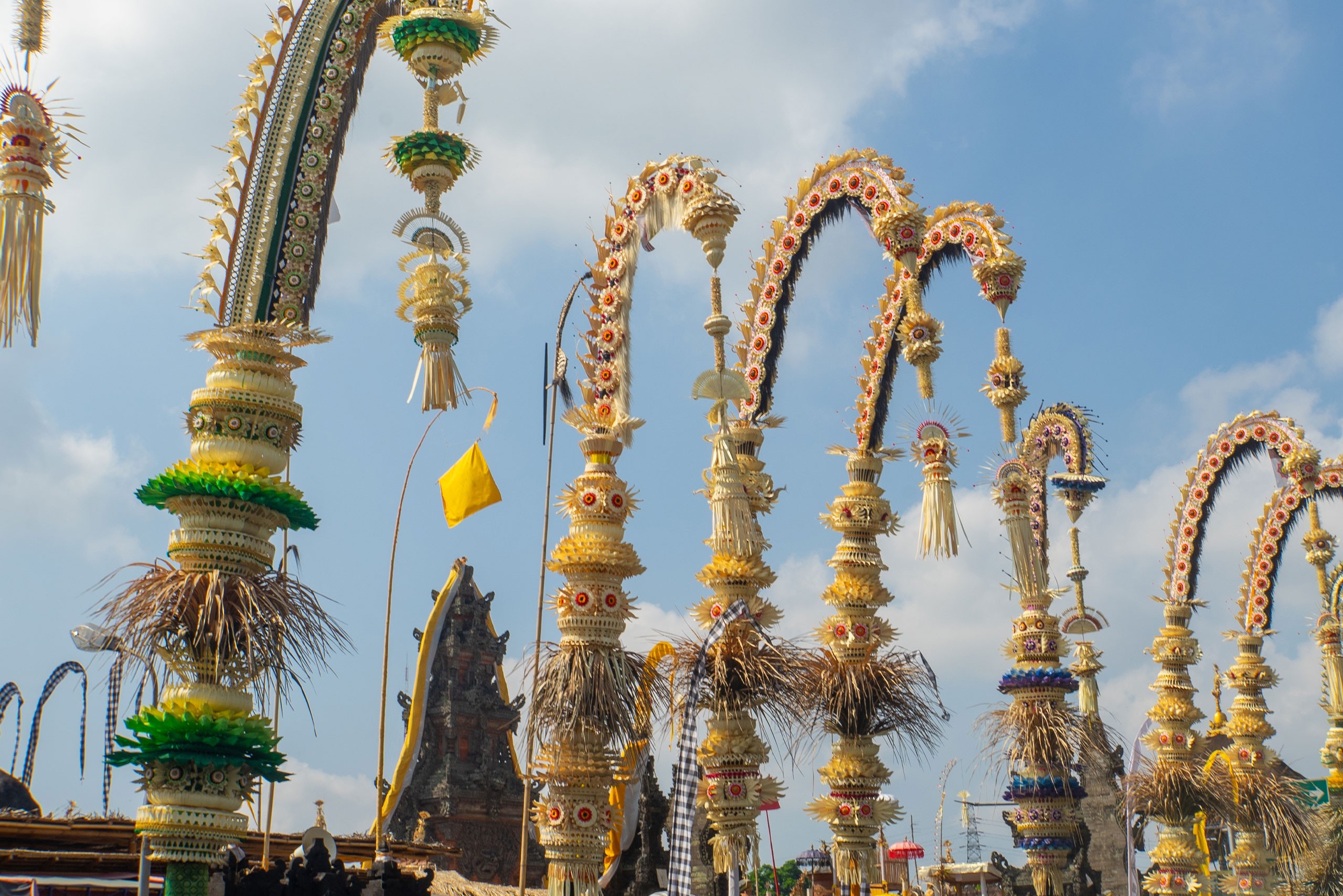
Hanging from the bamboo are woven coconut leaves (janur), rice, fruits, and other agricultural elements. These symbolize abundance and the fruits of human labor.
Each item is carefully arranged, not for aesthetic perfection alone, but as a sincere expression of gratitude. The penjor acknowledges that prosperity is not taken for granted—it is received and honored.
The Base Offering: Connection to the Earth
At the base of the penjor, offerings are placed as a grounding element. While the top reaches toward the divine, the base remains connected to the earth.
This duality reflects a key principle in Balinese belief: balance between the spiritual and the physical, the seen and unseen.
How Penjor Is Made: A Living Tradition
Creating a penjor is not a commercial activity—it is a cultural practice passed down through generations.

Community and Family Involvement
Families often gather to prepare their penjor together. The process involves selecting bamboo, weaving decorations, and assembling each element with care.
Children observe and participate, learning not just the technique, but the meaning behind it. In this way, the tradition continues organically.
Variations Across Regions
While the structure remains consistent, each penjor is unique. Some are simple and understated, others elaborate and detailed.
These variations reflect personal expression within a shared cultural framework. No two penjors are identical, yet all convey the same underlying values.
Practical Insight: How to Observe Penjor Respectfully
For travelers, penjor offers a visual gateway into Balinese culture. However, engaging with it respectfully is essential.
Where to See Penjor
Villages such as Ubud are particularly known for their beautifully decorated streets during Galungan. Rural areas often provide a more intimate and less crowded experience.
Photography Etiquette
- Avoid obstructing pathways or entrances
- Do not touch or move any part of the penjor
- Be mindful when photographing near homes or people praying
Timing Your Visit
Penjor is installed before Galungan and remains until Kuningan, about ten days later. Early mornings and late afternoons offer the most quiet and atmospheric moments for observation.
The Local Perspective: More Than Decoration
To the Balinese, penjor is not something to admire from a distance—it is something to live with.

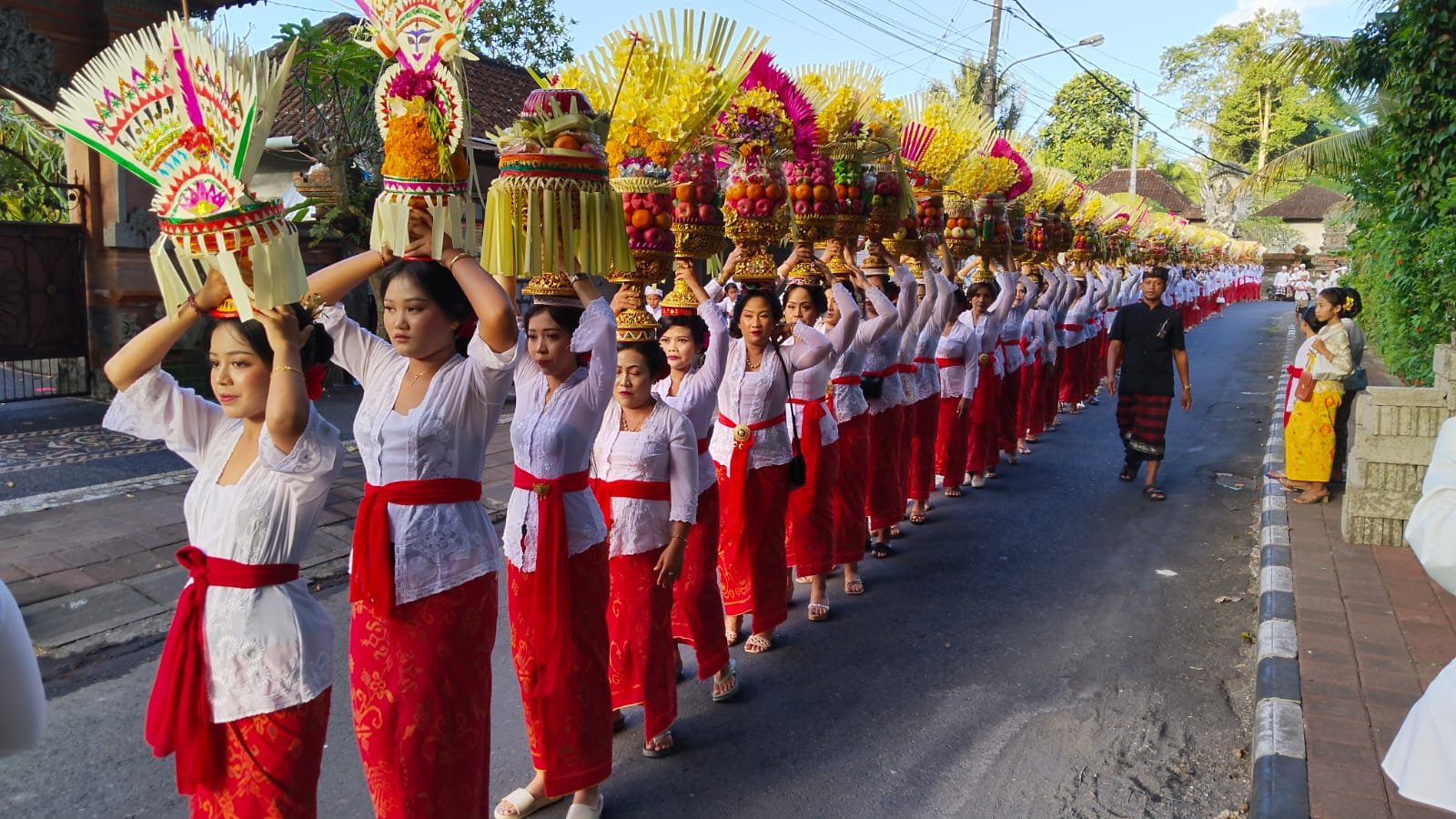
It stands at the entrance of the home, greeting both residents and visitors. It becomes part of daily routines—passed under, cared for, and acknowledged.
During Galungan, the presence of penjor transforms the landscape. Streets feel quieter, more intentional. The visual repetition creates a rhythm, reinforcing the sense of collective participation.
For locals, it is not about spectacle. It is about alignment—between belief, action, and environment.
Coffee, Observation, and Cultural Awareness
Experiencing penjor is not only about movement—it is also about stillness. Sitting quietly and observing how these structures interact with daily life can reveal layers that are easily missed.
Moments like these often unfold naturally in places that allow pause. Coffee, in this context, becomes more than a drink—it becomes a companion to observation.
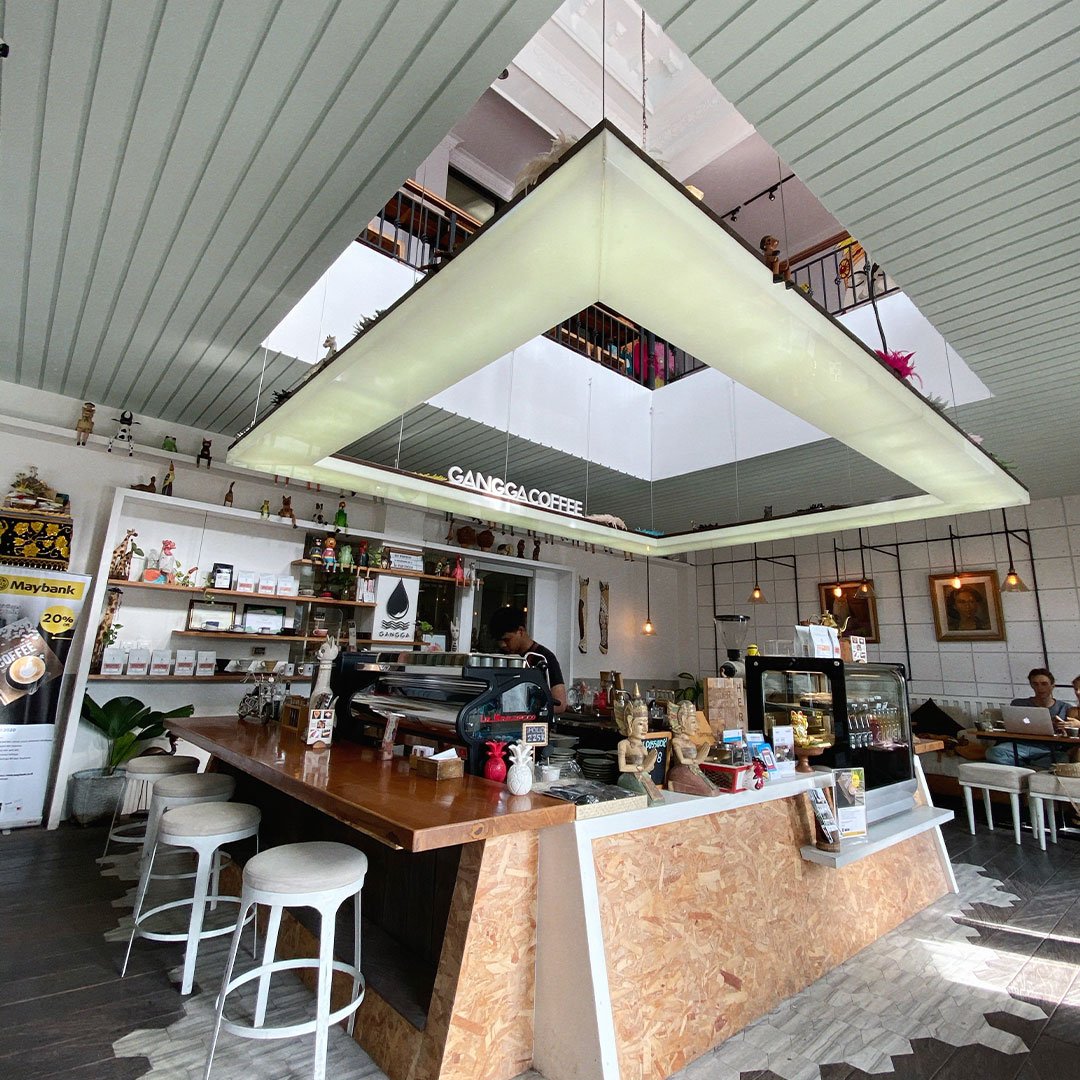
At Gangga Coffee, the experience aligns with this rhythm. Rather than pulling attention away, it creates space to notice—how light falls on a penjor, how people pass beneath it, how the atmosphere shifts during Galungan.
Soft Encounters with Culture at Gangga Coffee
In the midst of Galungan, there are moments between ceremonies—times when the pace slows and reflection becomes possible.
Gangga Coffee offers a setting that complements these moments. It does not compete with the surrounding culture, but gently supports it.
From such a space, one can begin to understand penjor not only as an object, but as part of a living environment—something that shapes and is shaped by the people around it.
Understanding Penjor Beyond Its Form
To understand the penjor Bali meaning is to move beyond its visual beauty and into its intention. It is a symbol of gratitude, a bridge between realms, and a quiet reminder of balance.
As you walk through Bali during Galungan, notice how each penjor stands both individually and collectively. It reflects not only belief, but participation—a shared commitment to harmony.
And perhaps, after walking beneath these arching forms, you may find yourself drawn to pause. In a place like Gangga Coffee, that pause can become part of the experience—an opportunity to sit, reflect, and absorb the deeper meaning carried by something as simple, and as profound, as a penjor.
If your journey leads you through Bali during this sacred time, you are gently invited to continue that reflection at Gangga Coffee, where the atmosphere allows culture to unfold at its own pace.
Frequently Asked Questions About Penjor in Bali
What is the purpose of penjor in Bali?
Penjor serves as an offering of gratitude to the divine, especially during Galungan. It symbolizes prosperity, balance, and the connection between humans and the spiritual world.
When are penjors installed in Bali?
Penjor is typically installed one day before Galungan, during a preparation day known as Penampahan Galungan. It remains in place until after Kuningan, about ten days later.
What materials are used to make penjor?
Penjor is made from a tall bamboo pole decorated with coconut leaves (janur), rice, fruits, and other natural elements. Each material carries symbolic meaning related to abundance and harmony.
Can tourists take photos of penjor?
Yes, but respectfully. Avoid touching the penjor, blocking entrances, or disturbing people during prayer. Observing quietly is always appreciated.
Why do all penjors look different?
Each penjor is handmade by families, allowing for personal expression while maintaining shared symbolic elements. This makes every penjor unique while still rooted in tradition.
Is penjor only used during Galungan?
Yes, penjor is most prominently associated with Galungan. However, similar decorative elements may appear in other ceremonies, though with different meanings and forms.
Where is the best place to see penjor in Bali?
Cultural areas like Ubud and surrounding villages offer some of the most visually striking and authentic displays, especially in less crowded residential streets.